Agriculture and Patriarchy: Growing and Severing the Roots of Male Dominance
Agriculture and Patriarchy examines how intensive natural resource extraction-enabled commercial agriculture consolidates male power, and how climate change may erode it. The first part of the book focuses on canal-irrigated sugarcane production in rural India, tracing how agricultural development consolidated men's dominance within households and communities. This was achieved all the while deepening unbridled and unsustainable water use.
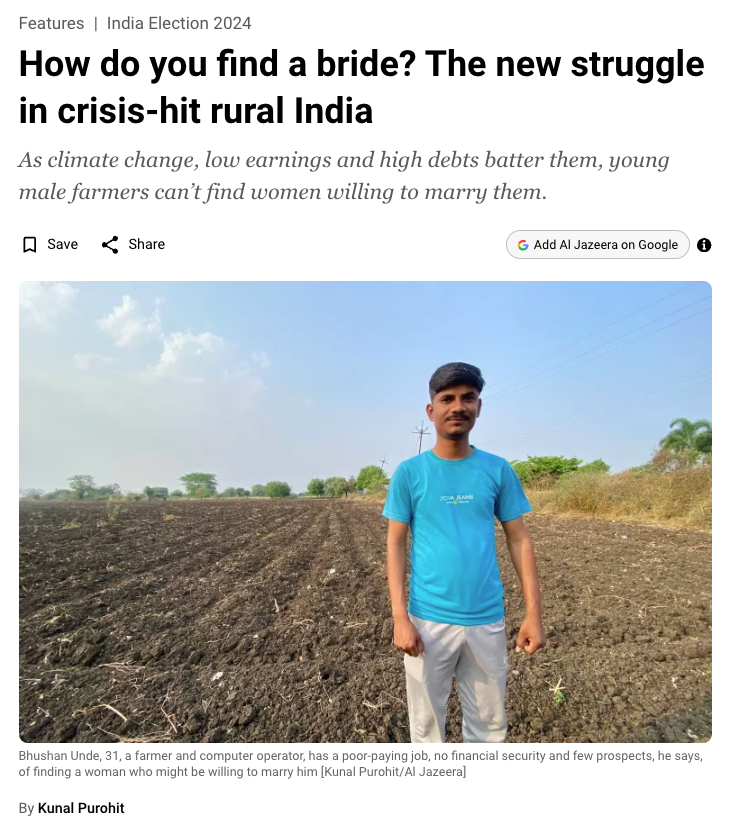
The second part of the book examines how climate change destabilizes the agricultural roots of male dominance. It does so by highlighting an understudied mechanism: the politics of marriage markets. The book argues that climate change-induced agricultural decline can disrupt the household-based foundations of male dominance by threatening farming men's marriage prospects. Marriage threat, moreover, can foment renegotiations of gendered power within marriages and across communities. The findings of the book revise conventional accounts of women as climate victims and show how poorly designed climate adaptation policies may re-entrench gender inequality.
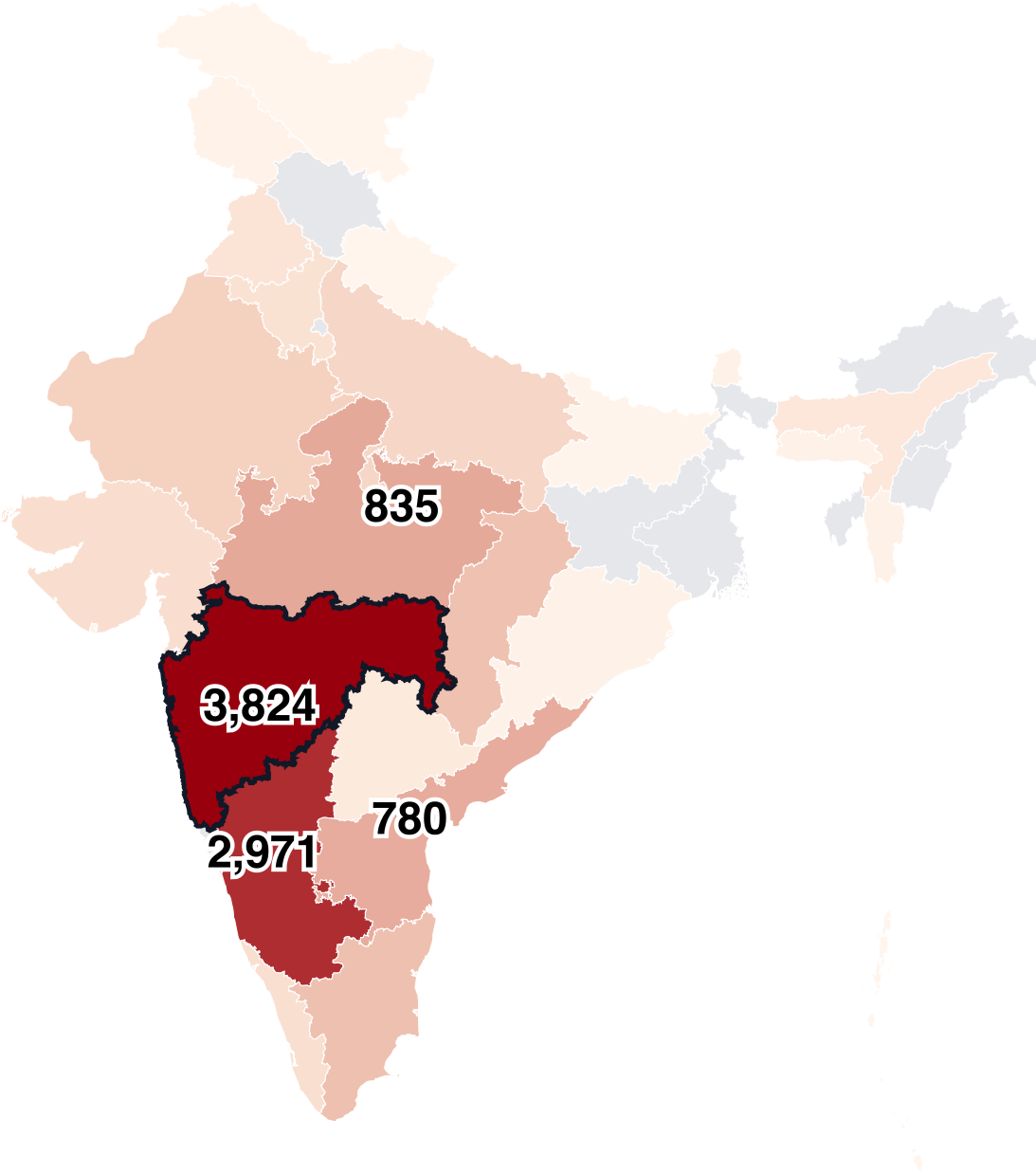
Empirically, the book focuses on Maharashtra, the epicenter of sugarcane production and agrarian crisis in India. It is mixed methods in nature, combining historical data, contemporary surveys and interviews, ethnography, as well as behavioral and natural experiments.
Farm-sector deaths by suicide, 2024